I am working on a few different pieces that will hopefully provide historically-informed commentary on current developments with regard to the relationship between the US and Israel/Palestine. These take time, though. Until then, I just want to be clear on a couple of things related to that:
No person of conscience should entertain Trump’s “plan” to plunder Gaza.
No person of conscience should entertain the kidnapping of people on the basis of their support for Palestinians.
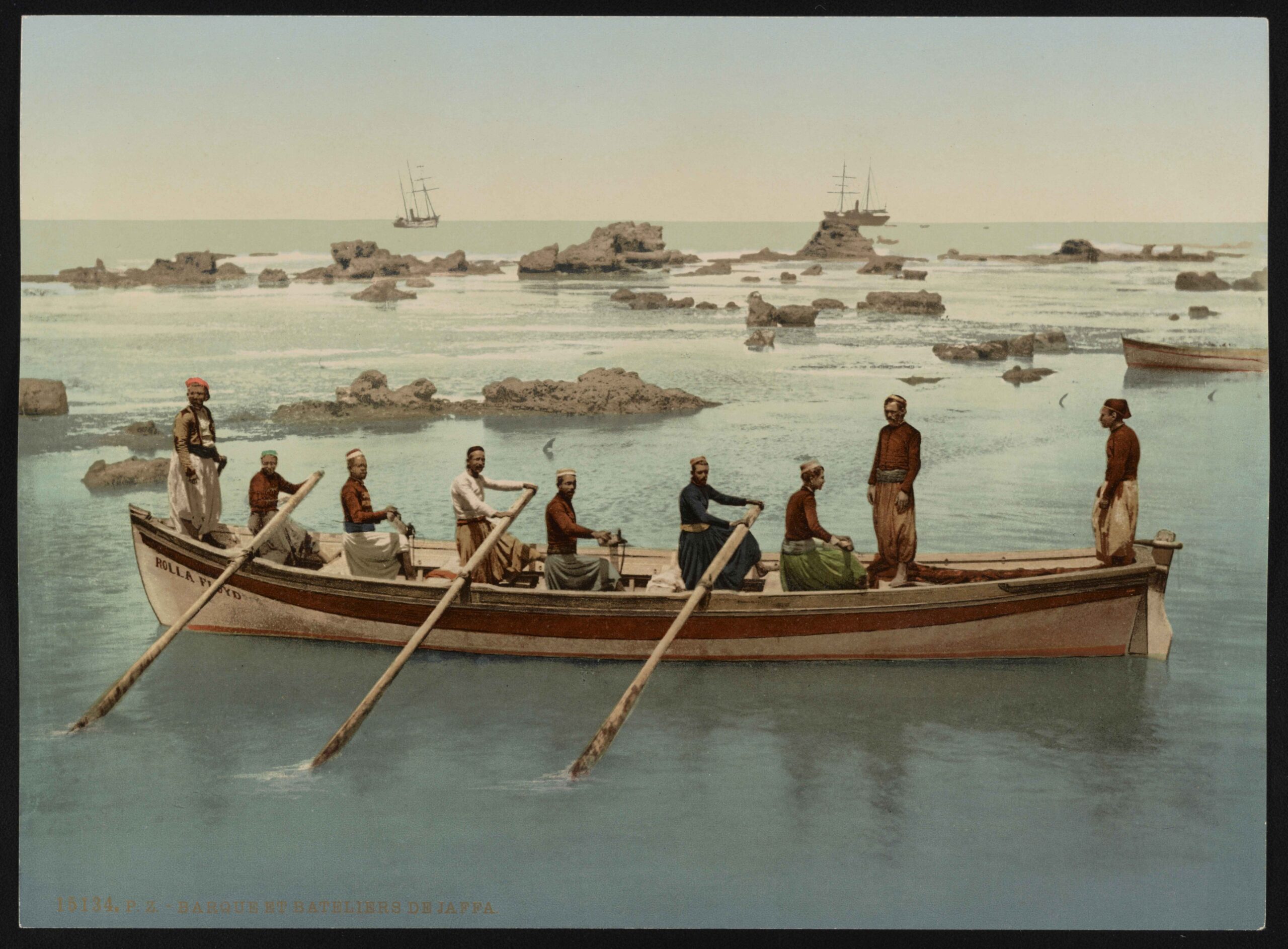
I’ve been curious about Floyd for years. He was part of the notorious “Adams Colony,” a group of dozens of Mainers (43 families) who were convinced by a radical millenarian preacher to up and move to the Holy Land just after the Civil War. It ended up being a disaster, with most colonists either dying or leaving. But a few stayed, including Floyd and his wife. He started running carriages between Jaffa and Jerusalem before becoming one of the leading travel guides in Palestine.
The piece looks at Floyd’s career, with particular attention to depictions of him in the copious travel literature of the era. Few native dragomen were written about in any detail, but the American Floyd appears frequently in Holy Land travel accounts.
I became interested in this angle when writing my dissertation/book, part of which involved reading tons of Palestine travelogues by Southern Baptists. Floyd appears in quite a few of them. One of the things that particularly intrigued me, though, was that I caught one travel writer “stealing” one of Floyd’s stories as his own. This man, Henry Allen Tupper, wrote two books about his travels in Palestine, one a conventional travelogue and another a more didactical work for young readers. In the conventional travelogue, he recounts a story about a Bedouin raid told to him by Floyd. In the other book, which is partially fictionalized, he presents it as something that the character representing him actually experienced.
It was a curious little find–not the sort of thing to be included in Between Dixie and Zion, which was focused on other things. But I held onto that little tidbit for years, wanting to more fully explore its implications. So, that is what you can read about on Commonplace.
 Walker Robins