Review of Chaim Weizmann (the book, not the man)

Last year, I wrote a review of Jehuda Reinharz and Motti Golani’s Chaim Weizmann: a Biography that did not end up running in an online publication that is now ceasing operations. Not wanting my work to go to waste, I give it below.
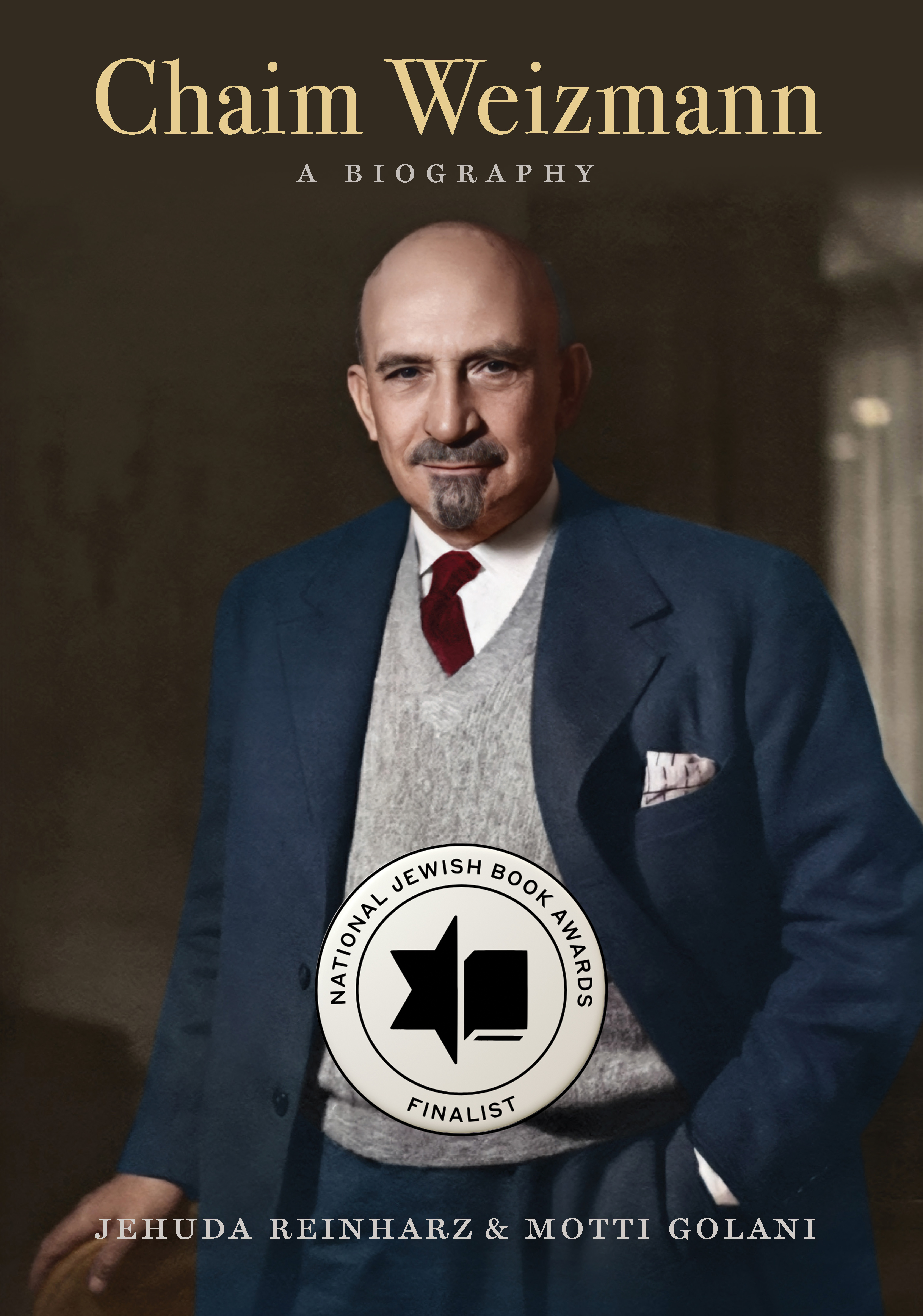

For three decades leading up to the establishment of Israel, Chaim Weizmann was the indispensable man of the Zionist movement—more than any other individual, he prepared the way for the creation of the Jewish state. Yet Weizmann is not particularly well-known today, even in Israel itself.

Historian Jehuda Reinharz has been working to remedy this for decades. In 2020, he and co-writer Motti Golani published the last Hebrew volume of Reinharz’s three-part biography of the Zionist statesman. Those three volumes have now been condensed into a single book by Avi Katzman and translated into English by Haim Watzman. The result is the magisterial Chaim Weizmann, an indispensable work about Zionism’s indispensable man.

Born in 1874 in the Russian Pale of Settlement, Weizmann spent his early adulthood in Central Europe, where he paired the study of chemistry with involvement in the combative environs of the early Zionist movement. In 1904, he left the continent to accept a position at the University of Manchester in England. There, Weizmann found his footing both as a scientist and Zionist leader—by the time the First World War broke out in 1914, he had vaulted to the top ranks of British Zionism.

The outbreak of war brought Weizmann to London and hurled him to prominence. It made his scientific work synthesizing acetone invaluable to Minister of Munitions David Lloyd George (soon to become prime minister). It set Britain against the Ottoman Empire, which had ruled Palestine for four centuries. And it disrupted the normal operations of the World Zionist Organization (WZO), which found its leadership divided among the warring powers. With sudden access to Whitehall—and without his WZO superiors able to assert much oversight—Weizmann set about making the Zionist cause Britain’s own.

It worked. The result was the Balfour Declaration, Britain’s pledge to create a Jewish “national home” in Palestine. While the triumph was not Weizmann’s alone, Reinharz and Golani demonstrate that it was undoubtedly his–as were his subsequent successes securing the flimsy promise’s inclusion in the League of Nations Mandate by which Britain would rule Palestine until 1948. With these achievements, Weizmann emerged as the clear leader of the Zionist movement, a position that was formalized with his 1920 election as president of the WZO.

The work did not end with Balfour. Britain’s commitment to the declaration was always tenuous, especially as Arab opposition mounted. As Reinharz and Golani show, Weizmann’s perennial achievement was in keeping the British committed to it as long as he did. By the time Britain did begin walking back its pledge in the late 1930s, the Zionists had already spent two decades building up the Yishuv (the Jewish community in Palestine) through immigration, land purchasing, and investment, and had developed proto-state institutions through the Jewish Agency—another Weizmann creation. The foundations of a possible Jewish state had been laid.

Even as Britain turned away from Balfour, it was Weizmann who seeded the idea that ultimately provided the basis for the establishment of Israel in 1948—partition. And even as rival David Ben-Gurion pushed the aging Weizmann from the presidency of the WZO in 1946, Weizmann’s diplomatic heft still proved essential in securing the support of the international community—especially US president Harry Truman—for partition and Israeli statehood.

Weizmann remained the indispensable man. It was only with the establishment of Israel, and with his election as its first president, that he suddenly and painfully found himself dispensable—an irony that Reinharz and Golani poetically capture in the book’s penultimate chapter. Weizmann was never really at home in the state he helped create.

Reinharz and Golani document and contextualize Weizmann’s many achievements well, all in keeping with the authors’ goal to “give him his due as Israel’s founding father” (xvii). The work’s greatest strength and interest, though, lay in the authors’ understanding of the man and how he operated. Weizmann is a fascinating study in that regard. He could veer wildly between total self-possession and illness-inducing self-doubt. He craved constant affirmation and demanded total loyalty from collaborators, whom he could cruelly cast aside. His achievements were beyond doubt, yet he continuously embellished them. He was in so many ways an exhausting, exhausted man, yet also undeniably magnetic.

Weizmann’s successes came where that magnetism could make him most effective—cultivating networks of well-placed allies, both within and without the Zionist movement. Among the core strengths of this biography is Reinharz and Golani’s ability to map out these ever-shifting networks. They are, in a sense, the main story. The most important of them, both in securing Zionist priorities and in guaranteeing Weizmann’s place at the head of the movement, was that of the British political elite. Weizmann counted prime ministers and cabinet secretaries among his friends and allies. He even counted some of them—like William Ormsby-Gore and Malcolm MacDonald—as his proteges, at least for a time.

Weizmann’s comfort among the British elite calls to mind American columnist Dorothy Thompson’s description of him as “a complete Jew” who “sits in his Jewishness as easily and proudly as an Englishman sits in his Englishness.” As Reinharz and Golani show, the Russian Jewish immigrant sat just as easily and proudly in his Britishness. At once a fully committed Zionist and a fully convinced British imperialist, the British-Zionist alliance he built made intrinsic sense to Weizmann. More than anyone else, he could make it make sense to others. Weizmann’s successes as a Zionist leader evolved from that—from hitching Zionism to the interests of the British Empire. It was a strategy that worked, both for Weizmann and for the movement. From Britain’s momentary wartime interests came the “national home.” From the national home came the Jewish state.

As Reinharz and Golani note, one of Weizmann’s guiding principles for Zionism was for Jews “not to rule and not to be ruled” (802). In this, as in many other things, Weizmann represented a moderate vision of Zionism that the authors clearly hope to revive. But the question remains whether a Zionism hitched to empire could ever have produced the state he sought. “I do not want this gift to blind my eyes,” one of Weizmann’s allies-turned-rivals, Judah Magnes, had written of the British Mandate in 1920. Twenty-nine years later, when Weizmann was sworn in as the first president of Israel, he could barely see.
Just to be clear

I am working on a few different pieces that will hopefully provide historically-informed commentary on current developments with regard to the relationship between the US and Israel/Palestine. These take time, though. Until then, I just want to be clear on a couple of things related to that:

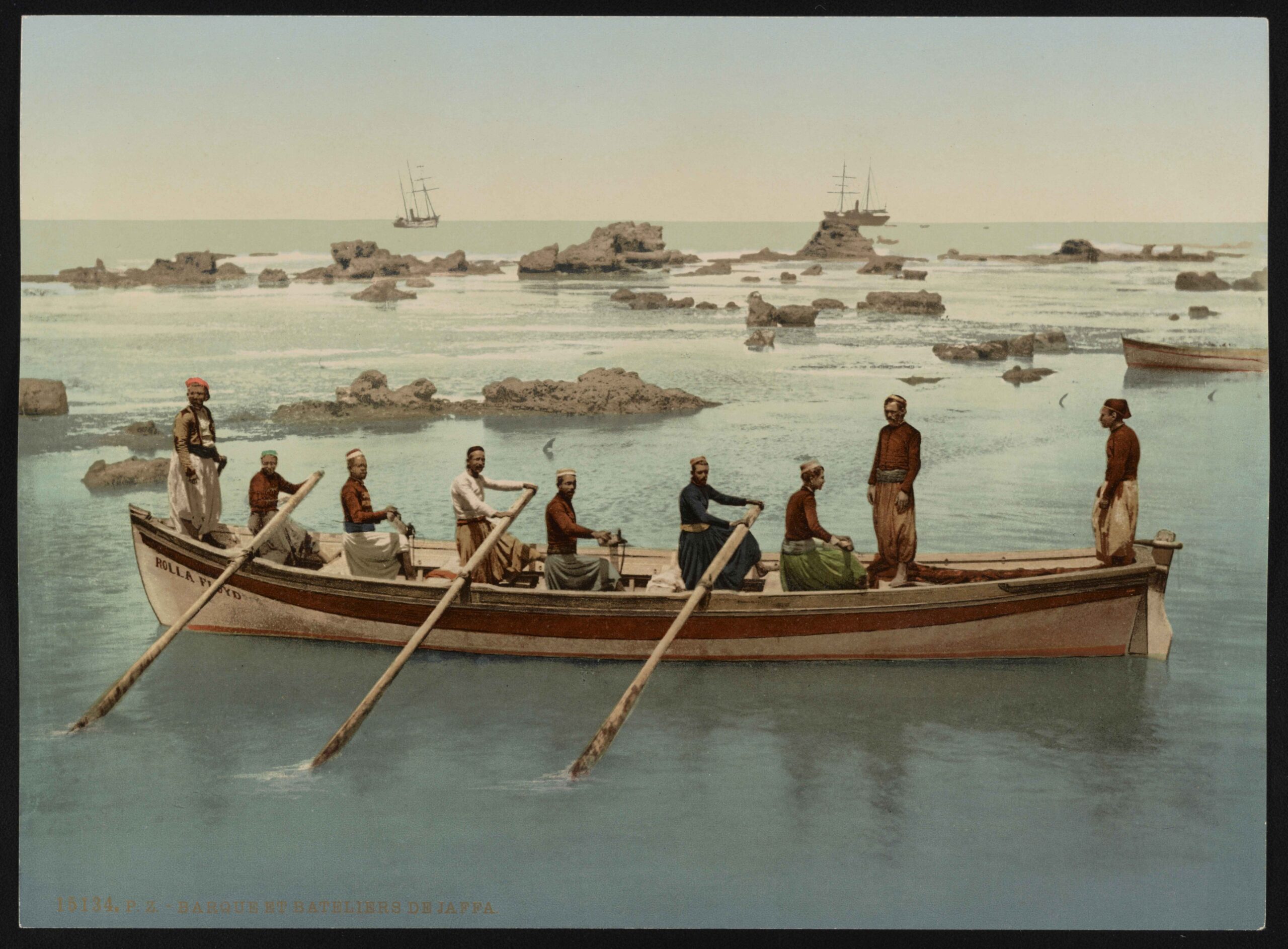
Rolla Floyd

From the LOC.

I’m happy to share the publication of a brief piece I wrote for Commonplace, “An American Dragoman in Palestine–and in Print.” It’s about a nineteenth-century American dragoman (i.e., fixer/guide) in the Holy Land named Rolla Floyd.

I’ve been curious about Floyd for years. He was part of the notorious “Adams Colony,” a group of dozens of Mainers (43 families) who were convinced by a radical millenarian preacher to up and move to the Holy Land just after the Civil War. It ended up being a disaster, with most colonists either dying or leaving. But a few stayed, including Floyd and his wife. He started running carriages between Jaffa and Jerusalem before becoming one of the leading travel guides in Palestine.

The piece looks at Floyd’s career, with particular attention to depictions of him in the copious travel literature of the era. Few native dragomen were written about in any detail, but the American Floyd appears frequently in Holy Land travel accounts.

I became interested in this angle when writing my dissertation/book, part of which involved reading tons of Palestine travelogues by Southern Baptists. Floyd appears in quite a few of them. One of the things that particularly intrigued me, though, was that I caught one travel writer “stealing” one of Floyd’s stories as his own. This man, Henry Allen Tupper, wrote two books about his travels in Palestine, one a conventional travelogue and another a more didactical work for young readers. In the conventional travelogue, he recounts a story about a Bedouin raid told to him by Floyd. In the other book, which is partially fictionalized, he presents it as something that the character representing him actually experienced.

It was a curious little find–not the sort of thing to be included in Between Dixie and Zion, which was focused on other things. But I held onto that little tidbit for years, wanting to more fully explore its implications. So, that is what you can read about on Commonplace.

On Huckabee (kind of)

From TBN.

A few weeks ago, Trump tapped Mike Huckabee to be his ambassador to Israel. Besides being a perennial Republican presidential candidate and right-wing media personality, Huckabee is, of course, a Southern Baptist minister and an out-and-out Christian Zionist.

While a number of good pieces of commentary have since been published on Huckabee’s Christian Zionism and its likely implications, I wrote a piece for Baptist News Global coming at Huckabee’s nomination from a somewhat different angle. Huckabee has, at a few times, denied the existence of Palestinian peoplehood, something that’s not an uncommon view among professional Christian Zionists. So, I chose to juxtapose Huckabee’s views against the history of Southern Baptist relations to Palestine–a history whose most direct and enduring connection runs through the Palestinian community. Here it is.

Allenby, O’ Allenby!

Allenby, center, with John Huston Finley on the right (LOC)

For those interested in American perspectives on the “Palestine question” coming out of WWI, I recently published an article in First World War Studies about John Huston Finley, who led the American Red Cross’s Commission to Palestine during the war. While serving in that role, Finley had worked closely with British forces led by Gen. Edmund Allenby. Finley came away from the experience absolutely infatuated with Allenby–an infatuation that helped convince Finley that the British would be ideal stewards of the Holy Land.

Making Baptist History Public Webinar

For those who weren’t able to Zoom in and are interested in the subject, last month’s webinar on Between Dixie and Zion–part of the wonderful Making Baptist History Public series organized by Andrew Gardner–has been uploaded to YouTube. I am grateful for the opportunity to have been a part of the series, most especially because of the thoughtful response of Rev. Dr. Allison Tanner of Lakeshore Avenue Baptist Church in Oakland, CA, and the great questions and comments offered by the congregants of Ravensworth Baptist Church, which is located outside DC. Here’s a very thorough write-up on the event from Jeff Brumley of the Baptist News. And here is the video:

Between Dixie and Zion Webinar

I’m very grateful to the Baptist History and Heritage Society for inviting me to participate in their Making Baptist History Public webinar series. The concept is great–scholars of Baptist history talk about their work with a sponsor congregation and a pastoral respondent. This Thursday, 11/3, I’ll be speaking to members of Ravensworth Baptist Church in Virginia. Allison Tanner of Lakeshore Avenue Baptist Church in Oakland will be the respondent. Everyone’s invited, though! You just have to register here.

Dorothy Thompson and Zionism

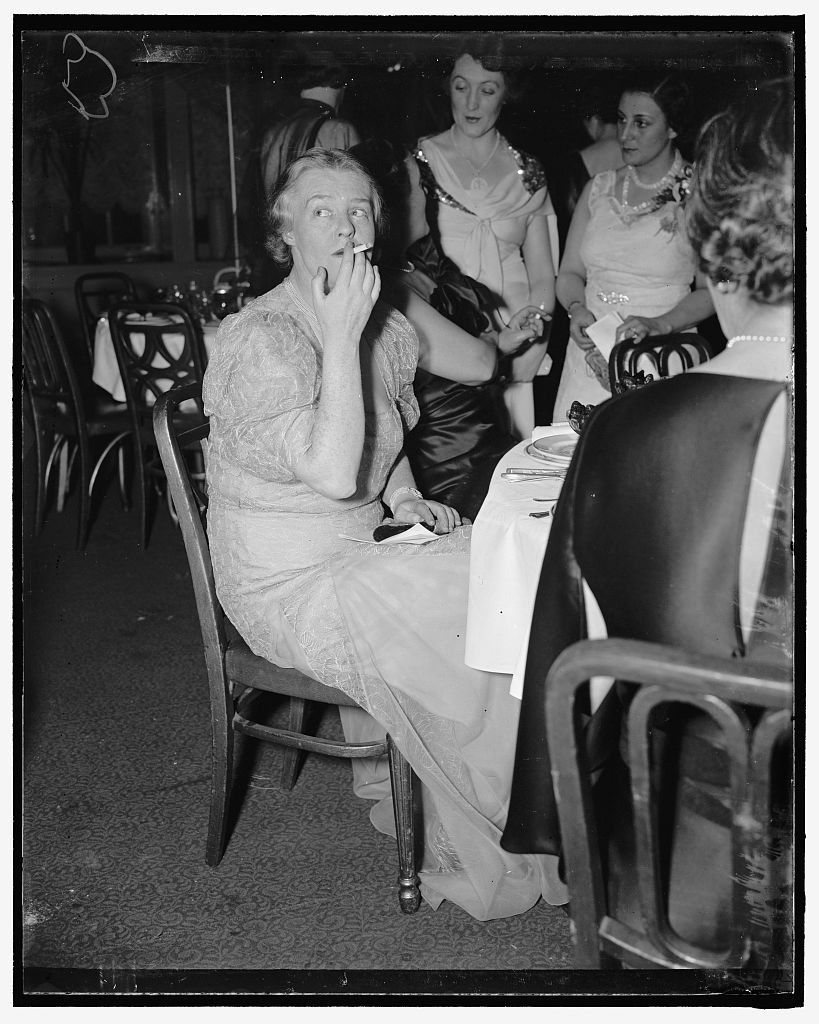
Source: LOC

I have a new article out in the most recent American Jewish History on journalist and political commentator Dorothy Thompson’s relationship to the Zionist movement and Israel.

Thompson was a remarkable figure. She was the first woman to lead an American newspaper’s overseas news bureau (as the Berlin bureau chief for the Philadelphia Public Ledger). She endured a lively but tumultuous marriage to Sinclair Lewis (for a time). She was the first American columnist to interview Hitler, whom she mocked as “insignificant” and “formless” in a 1932 profile for Cosmopolitan. During the crises of the 1930s, Thompson became perhaps the foremost American advocate of a political solution to the growing international refugee crisis (as well as privately supporting a number of individual refugees). After the initial outbreak of WWII in 1939, she used her platform as one of the most widely-read political commentators in the US to urge American support for the Allies.

What prompted my interest in Thompson, though, was that she famously went from being a fervent supporter of the Zionist movement in the early 1940s to one of its leading critics after the establishment of Israel in 1948. This shift alternately puzzled, excited, and angered her contemporaries. How and why did it happen? Read “‘Weizmann to her was God’: Dorothy’s Thompson’s Journey to and From Zionism” to find out…

New Review of BDZ

Jackson Reinhardt has offered a thorough and generous review of Between Dixie and Zion in the Alabama Review. Here’s a brief excerpt:

“…this text is a fantastic academic resource. Robins’ careful and expert analysis of primary sources–from small Baptist newspapers to presidential recollections–and secondary sources on all manner of topics–Palestinian history, Jewish history, history of Baptists, evangelicals, and Christian Zionism–is highly commendable. His emphasis on how personal, contextual encounters shape theological and ideological commitments of anti-/pro-Zionism should be seriously considered and employed by future histories focusing on American Christian perspectives on Palestine. Rather than merely reciting the prevailing political and theological positions of a given period from merely established scholars and authorities, following Robins’s method can provide future histories on Christian Zionism with all the nuance, complexity, and problematics a denominational missionary, leader, and layperson encounters.”