I am working on a few different pieces that will hopefully provide historically-informed commentary on current developments with regard to the relationship between the US and Israel/Palestine. These take time, though. Until then, I just want to be clear on a couple of things related to that:
No person of conscience should entertain Trump’s “plan” to plunder Gaza.
No person of conscience should entertain the kidnapping of people on the basis of their support for Palestinians.
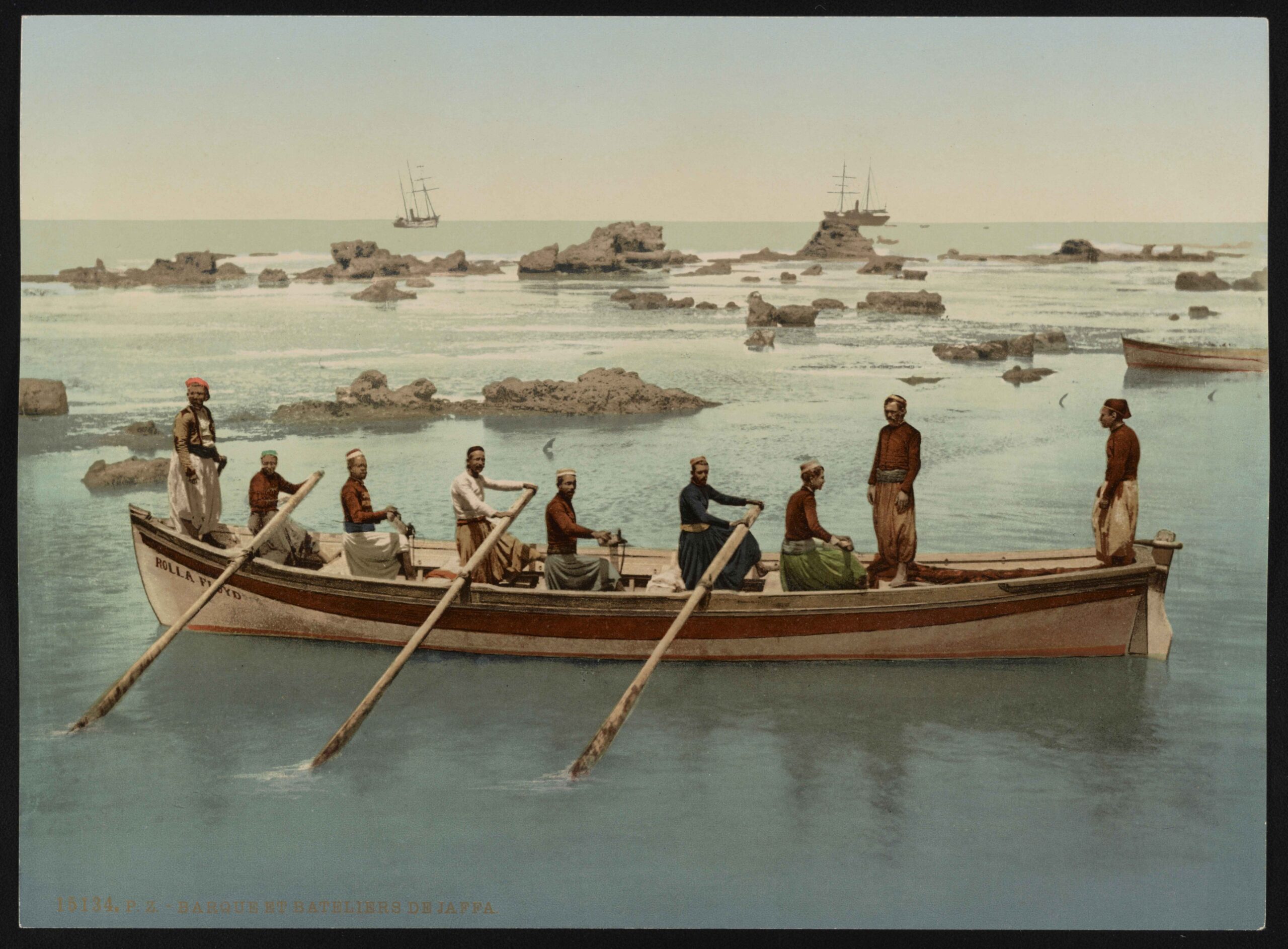
I’ve been curious about Floyd for years. He was part of the notorious “Adams Colony,” a group of dozens of Mainers (43 families) who were convinced by a radical millenarian preacher to up and move to the Holy Land just after the Civil War. It ended up being a disaster, with most colonists either dying or leaving. But a few stayed, including Floyd and his wife. He started running carriages between Jaffa and Jerusalem before becoming one of the leading travel guides in Palestine.
The piece looks at Floyd’s career, with particular attention to depictions of him in the copious travel literature of the era. Few native dragomen were written about in any detail, but the American Floyd appears frequently in Holy Land travel accounts.
I became interested in this angle when writing my dissertation/book, part of which involved reading tons of Palestine travelogues by Southern Baptists. Floyd appears in quite a few of them. One of the things that particularly intrigued me, though, was that I caught one travel writer “stealing” one of Floyd’s stories as his own. This man, Henry Allen Tupper, wrote two books about his travels in Palestine, one a conventional travelogue and another a more didactical work for young readers. In the conventional travelogue, he recounts a story about a Bedouin raid told to him by Floyd. In the other book, which is partially fictionalized, he presents it as something that the character representing him actually experienced.
It was a curious little find–not the sort of thing to be included in Between Dixie and Zion, which was focused on other things. But I held onto that little tidbit for years, wanting to more fully explore its implications. So, that is what you can read about on Commonplace.
A few weeks ago, Trump tapped Mike Huckabee to be his ambassador to Israel. Besides being a perennial Republican presidential candidate and right-wing media personality, Huckabee is, of course, a Southern Baptist minister and an out-and-out Christian Zionist.
While a number of good pieces of commentary have since been published on Huckabee’s Christian Zionism and its likely implications, I wrote a piece for Baptist News Global coming at Huckabee’s nomination from a somewhat different angle. Huckabee has, at a few times, denied the existence of Palestinian peoplehood, something that’s not an uncommon view among professional Christian Zionists. So, I chose to juxtapose Huckabee’s views against the history of Southern Baptist relations to Palestine–a history whose most direct and enduring connection runs through the Palestinian community. Here it is.
Allenby, center, with John Huston Finley on the right (LOC)
For those interested in American perspectives on the “Palestine question” coming out of WWI, I recently published an article in First World War Studies about John Huston Finley, who led the American Red Cross’s Commission to Palestine during the war. While serving in that role, Finley had worked closely with British forces led by Gen. Edmund Allenby. Finley came away from the experience absolutely infatuated with Allenby–an infatuation that helped convince Finley that the British would be ideal stewards of the Holy Land.
Last week, I had the good fortune to back to Oklahoma to give a talk on Dorothy Thompson and Zionism based on this article. Thanks to my old home, the Schusterman Center for Judaic and Israel Studies, for having me back!
For those who weren’t able to Zoom in and are interested in the subject, last month’s webinar on Between Dixie and Zion–part of the wonderful Making Baptist History Public series organized by Andrew Gardner–has been uploaded to YouTube. I am grateful for the opportunity to have been a part of the series, most especially because of the thoughtful response of Rev. Dr. Allison Tanner of Lakeshore Avenue Baptist Church in Oakland, CA, and the great questions and comments offered by the congregants of Ravensworth Baptist Church, which is located outside DC. Here’s a very thorough write-up on the event from Jeff Brumley of the Baptist News. And here is the video:
I’m very grateful to the Baptist History and Heritage Society for inviting me to participate in their Making Baptist History Public webinar series. The concept is great–scholars of Baptist history talk about their work with a sponsor congregation and a pastoral respondent. This Thursday, 11/3, I’ll be speaking to members of Ravensworth Baptist Church in Virginia. Allison Tanner of Lakeshore Avenue Baptist Church in Oakland will be the respondent. Everyone’s invited, though! You just have to register here.
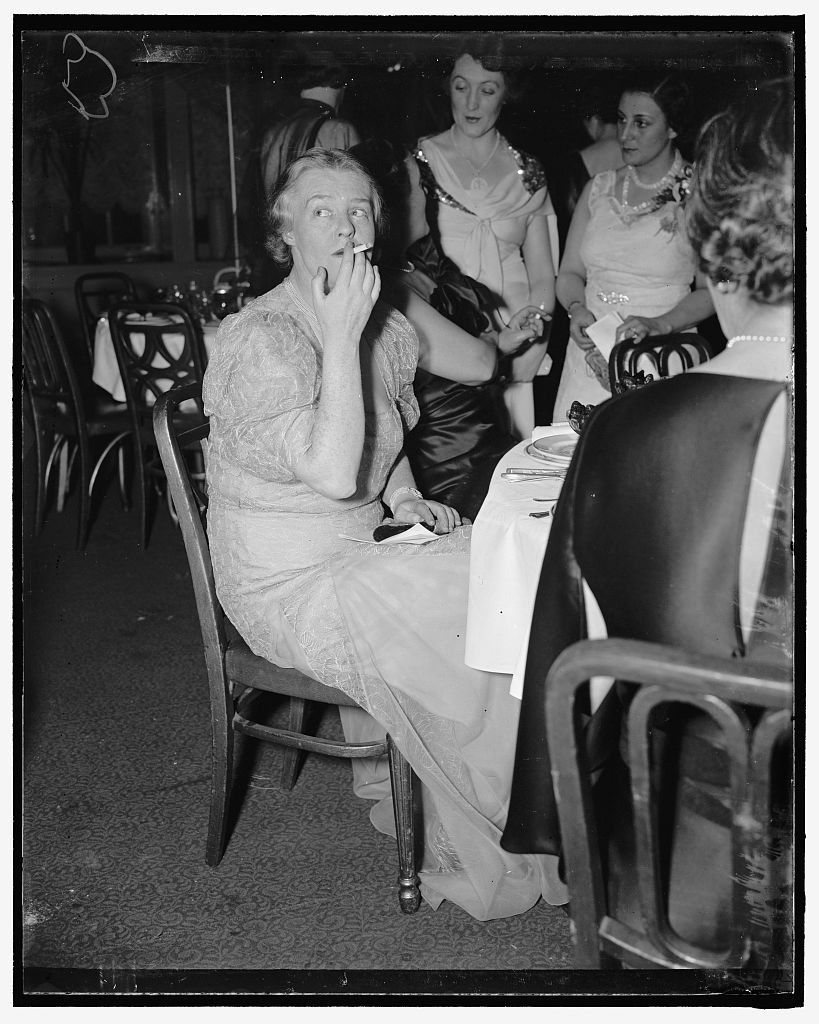
I have a new article out in the most recent American Jewish History on journalist and political commentator Dorothy Thompson’s relationship to the Zionist movement and Israel.
Thompson was a remarkable figure. She was the first woman to lead an American newspaper’s overseas news bureau (as the Berlin bureau chief for the Philadelphia Public Ledger). She endured a lively but tumultuous marriage to Sinclair Lewis (for a time). She was the first American columnist to interview Hitler, whom she mocked as “insignificant” and “formless” in a 1932 profile for Cosmopolitan. During the crises of the 1930s, Thompson became perhaps the foremost American advocate of a political solution to the growing international refugee crisis (as well as privately supporting a number of individual refugees). After the initial outbreak of WWII in 1939, she used her platform as one of the most widely-read political commentators in the US to urge American support for the Allies.
What prompted my interest in Thompson, though, was that she famously went from being a fervent supporter of the Zionist movement in the early 1940s to one of its leading critics after the establishment of Israel in 1948. This shift alternately puzzled, excited, and angered her contemporaries. How and why did it happen? Read “‘Weizmann to her was God’: Dorothy’s Thompson’s Journey to and From Zionism” to find out…
“…this text is a fantastic academic resource. Robins’ careful and expert analysis of primary sources–from small Baptist newspapers to presidential recollections–and secondary sources on all manner of topics–Palestinian history, Jewish history, history of Baptists, evangelicals, and Christian Zionism–is highly commendable. His emphasis on how personal, contextual encounters shape theological and ideological commitments of anti-/pro-Zionism should be seriously considered and employed by future histories focusing on American Christian perspectives on Palestine. Rather than merely reciting the prevailing political and theological positions of a given period from merely established scholars and authorities, following Robins’s method can provide future histories on Christian Zionism with all the nuance, complexity, and problematics a denominational missionary, leader, and layperson encounters.”
Last semester, I taught a course on public history called “History Outside of the Classroom.” This was my first time teaching that course–really, it was my first time teaching that kind of course at all. I was interested in it, though, because I thought that the pandemic presented a unique opportunity for students to do a different kind of historical work than they usually do in my classrooms.
So, I organized the class around gathering materials for an online exhibition about the Merrimack community’s experiences during the pandemic. Students were tasked with legally and ethically acquiring relevant artifacts and interviews, as well as preparing them for exhibition. Altogether, they did a fantastic job–as I told them repeatedly, I think they created something of real historical value. I’m very pleased to now share their work with the public. Please have a look at Experiencing the Pandemic: a Merrimack College Public History Project.



 Walker Robins